De-Sadel Consortium: Pioneering Nigeria’s High-Speed Future with 4,000km of Rail Innovation
By Morgan Adikwu
Nigeria is on the cusp of a historic transformation. With the launch of Africa’s first and the world’s second international high-speed railway summit, a bold vision has been laid out to re-engineer the country’s economic, social, and political landscape.
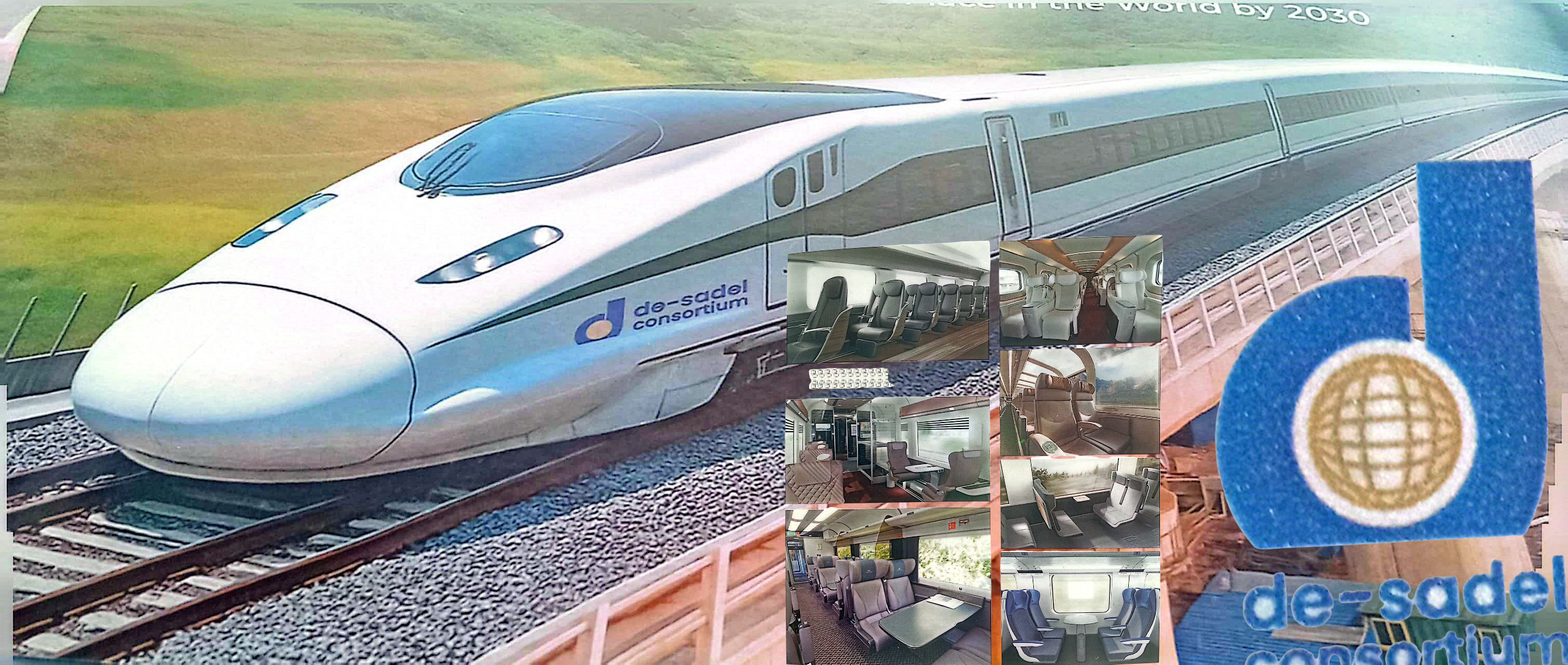
Spearheaded by the Federal Ministry of Transport, Nigeria, in partnership with De-Sadel Consortium as the major partner on the project, this initiative signals a new dawn in national development. At the heart of this transformative agenda stands De-Sadel Consortium, the pioneering partner driving a revolution in Nigeria’s transport sector, just as telecommunications did in the early 2000s.
For decades, Nigerians have suffered from inadequate infrastructure, poor road safety, and a limited transportation network that stifled trade, integration, and growth. De-Sadel’s intervention marks a decisive break from this legacy, placing Nigeria on the global map of modern high-speed rail infrastructure.
When the colonial masters built the first railway lines in Nigeria, their intent was not altruistic development but economic exploitation. Railways were designed to connect the hinterlands with ports, hauling cocoa, palm produce, cotton, tin, and groundnuts to feed European industries. Despite their narrow purpose, those rail lines created undeniable spillover effects that transformed communities.
They opened trade corridors, enabling farmers to access larger markets and boosting production. They gave birth to towns such as Kaduna, Enugu, Jos, and Ibadan, which flourished as rail hubs. They allowed greater social mobility, with people moving freely, blending cultures, and fostering unity. And they supported a level of economic integration that reduced dependence on fragmented local markets, knitting Nigeria together into a single trading system. If a colonial railway system built for extraction could produce such benefits, then a modern, people-focused network covering the whole nation will be nothing short of revolutionary.
De-Sadel’s vision extends far beyond the mere movement of passengers. The 4,000km high-speed rail system, designed to run at 350km per hour and covering all 36 states of the federation including the FCT, is set to retool the very engine of Nigeria’s economy. Journeys that once felt endless will now be swift, comfortable, and predictable: Lagos to Abuja, a distance of 700km, will take just two hours and thirty minutes; Abuja to Port Harcourt will be two hours and fifteen minutes; Abuja to Kano, a journey of 400km, will last only one hour and twenty minutes.
Such connectivity dismantles geographic barriers, unifies markets, and rewires Nigeria’s logistics backbone. From business executives to traders, from students to tourists, millions will benefit from affordable, safe, and time-saving mobility.
The model is inclusive, reflecting the diversity of Nigeria’s population. First Class offers airline-style luxury with flat beds, gourmet meals, private cabins, and VIP lounges, positioning travel as a prestigious experience. Business Class provides balance with spacious seats, Wi-Fi, light meals, and the comfort of premium service without losing accessibility. Standard Class remains the backbone, with affordable fares, comfortable seating, and a modern, air-conditioned environment that brings convenience to the everyday commuter. By offering these tiers, De-Sadel ensures no Nigerian is left behind in this journey toward modernization.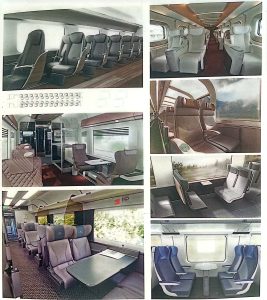
It is impossible to ignore the contrast between this bold initiative and the failed prescriptions of the past. During the Structural Adjustment Programme of the 1980s, Nigeria was pushed into short-term solutions that ignored infrastructure investment. Instead of railways, policymakers turned to mass importation of J5 vehicles as a substitute for public transport. The result was disastrous. Roads became death traps, with thousands perishing in accidents that could have been avoided.
The influx of heavy cargo onto fragile highways led to rapid road decay, while the absence of an integrated network only fragmented the economy further. The scars of SAP are still evident, but De-Sadel’s initiative provides the long-awaited antidote. By rejecting temporary fixes and focusing on sustainable, generational investment, it lays the foundation for long-term prosperity.
The socioeconomic benefits of this high-speed rail are as far-reaching as they are transformative. It will integrate the economy by connecting producers to consumers, farmers to markets, and entrepreneurs to new opportunities, while drastically reducing transport costs. It will create millions of jobs, both directly through construction, operations, and maintenance, and indirectly through the industries and businesses that will spring up along the corridors.
Industrialization will be accelerated as manufacturing and agro-processing hubs develop around new transport nodes. Tourism will be given a major boost as Nigerians find it easier to explore their own country, leading to cultural exchange and national integration. Environmental gains will follow as reliance on road transport diminishes, reducing emissions and supporting greener growth.
Urban renewal will take shape as stations become the nucleus of new smart cities, just as Kaduna and Enugu once blossomed around colonial depots. Most importantly, the rail will reduce the dangers of road travel, limiting accidents and insecurity, while offering Nigeria the global competitiveness it desperately needs.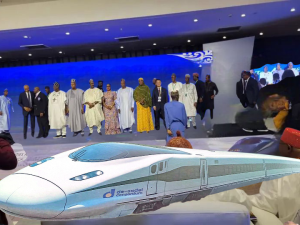
De-Sadel Consortium deserves accolades for this audacious vision. By pushing for a pan-Nigerian high-speed rail system, it has shown the courage to address the Achilles heel of Nigeria’s economy, transportation. Where others see insurmountable challenges, De-Sadel sees opportunity. Where past leaders settled for policy gimmicks, De-Sadel offers a concrete pathway to prosperity.
Just as the telecommunications revolution democratized communication, reduced costs, and created a trillion-naira industry, the rail revolution will democratize movement, open new economies, and build an interconnected Nigeria. This is not merely about tracks and stations, but about futures, about creating a country where a trader in Lagos can sell in Kano, where a farmer in Benue can send fresh produce to Port Harcourt, and where a graduate can commute for work across states without uprooting their life.
The De-Sadel Consortium has not just conceived a railway project, it has launched a national renaissance. By connecting every corner of the country with a 4,000km high-speed network, Nigeria is set to leapfrog into an era of inclusive growth, seamless trade, and global competitiveness.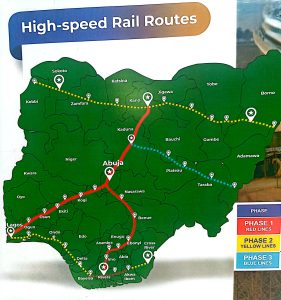
If colonial rail built for exploitation could still generate lasting socioeconomic openings, then De-Sadel’s people-focused rail will unleash prosperity, unify the nation, and transform lives. This is not just a project; it is a legacy. De-Sadel has given Nigeria not just a railway, but a new economic heartbeat.